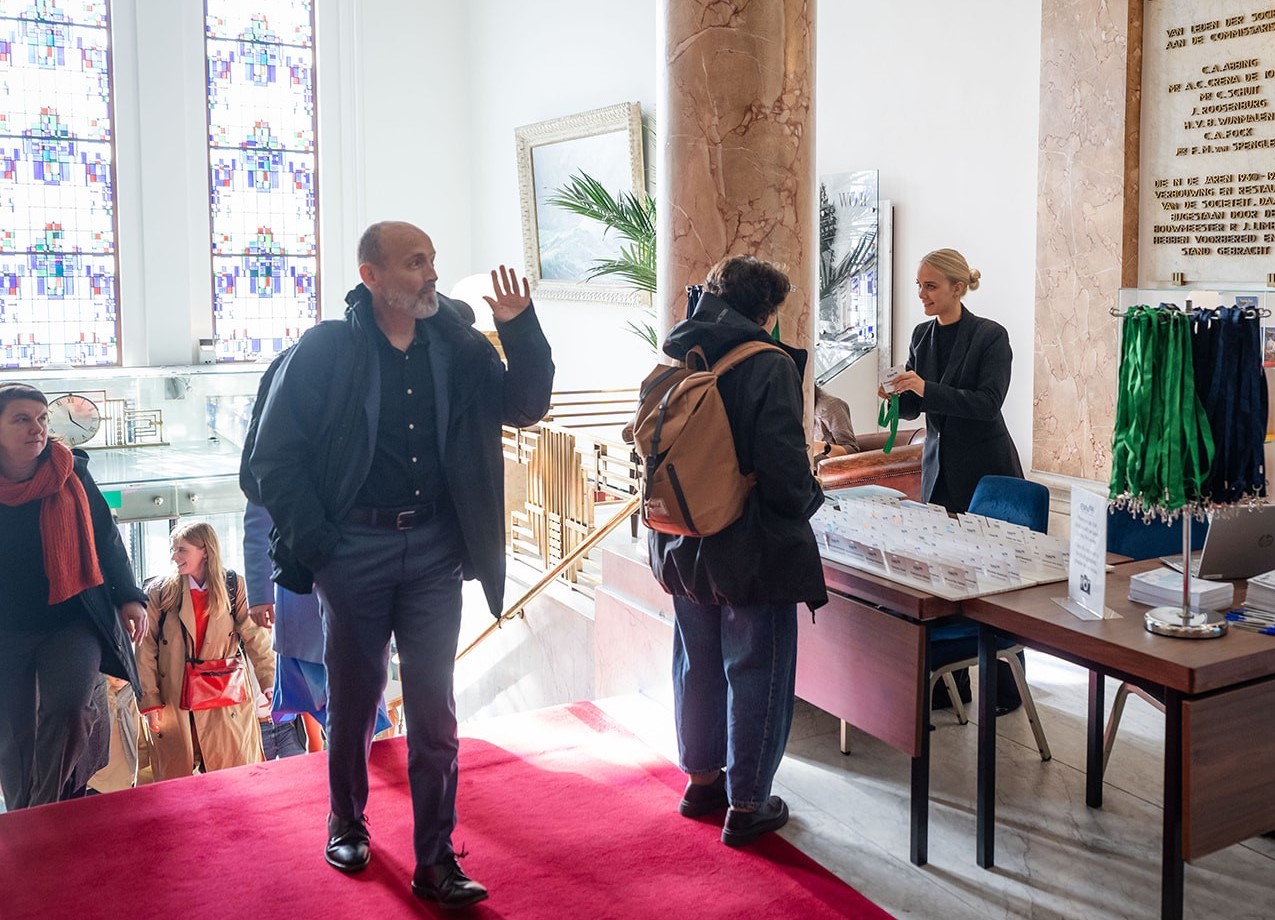
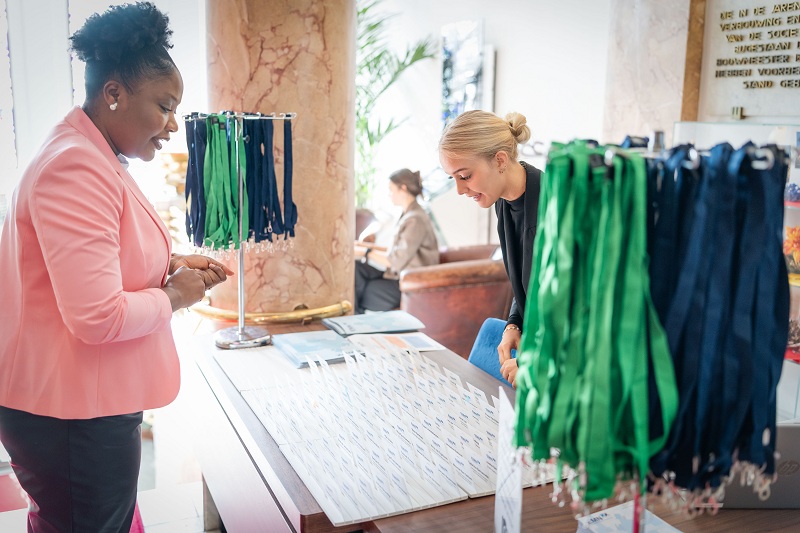
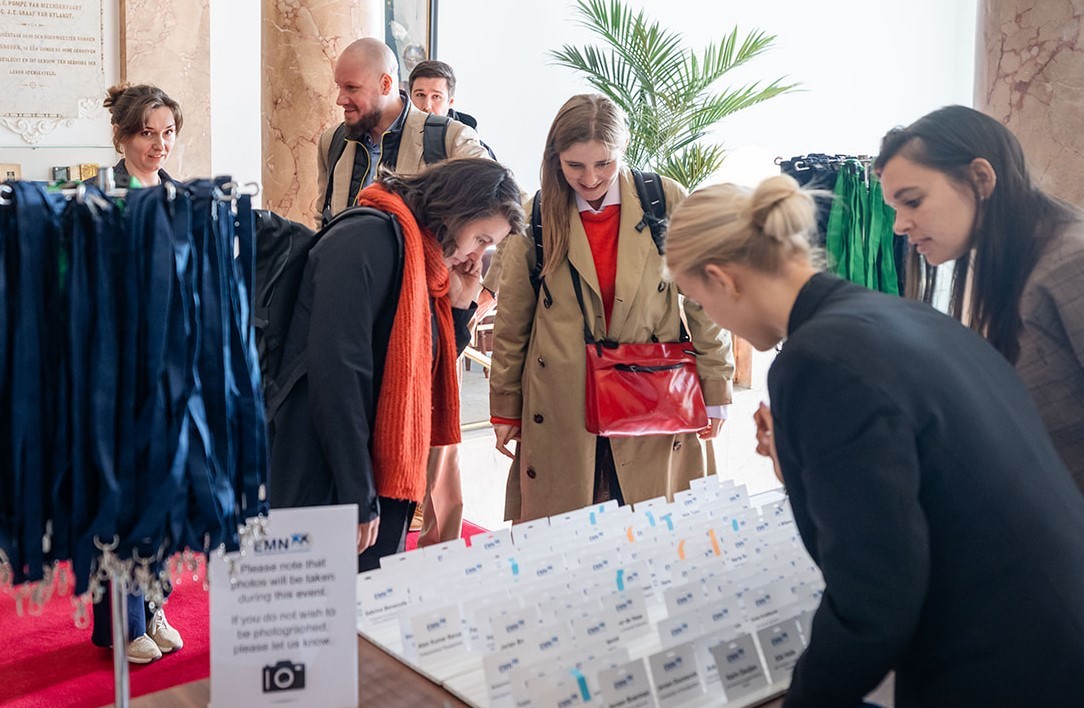
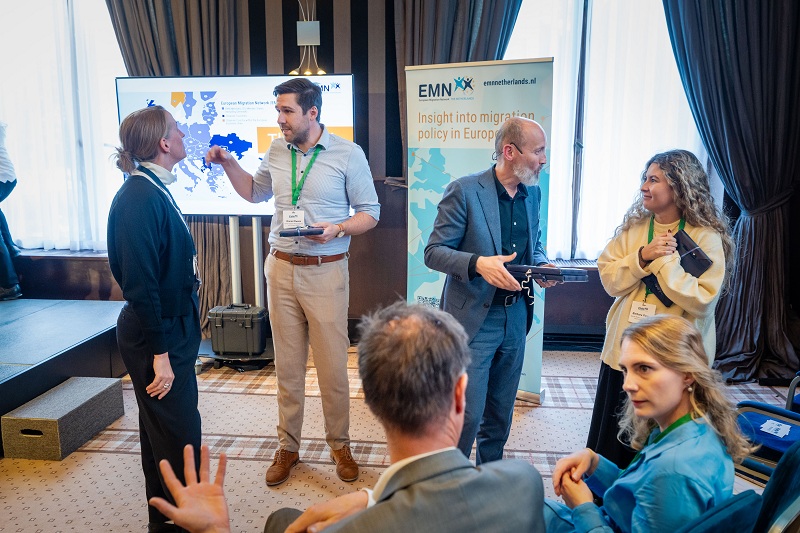
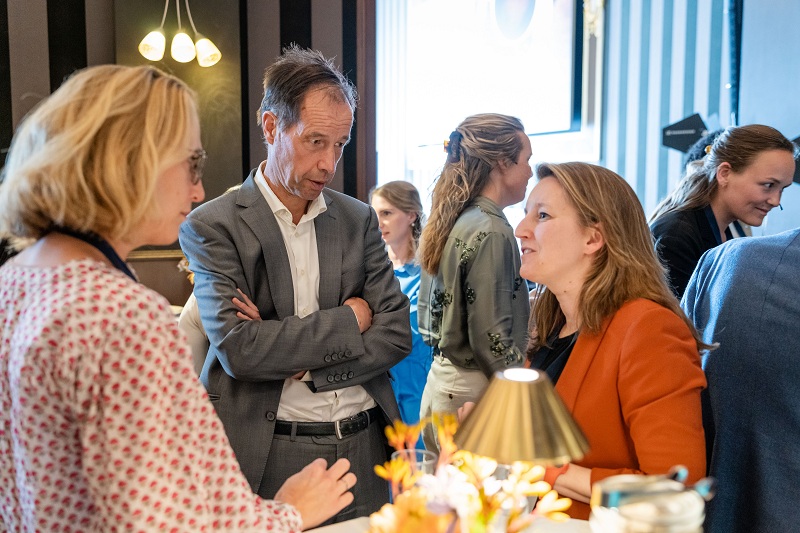
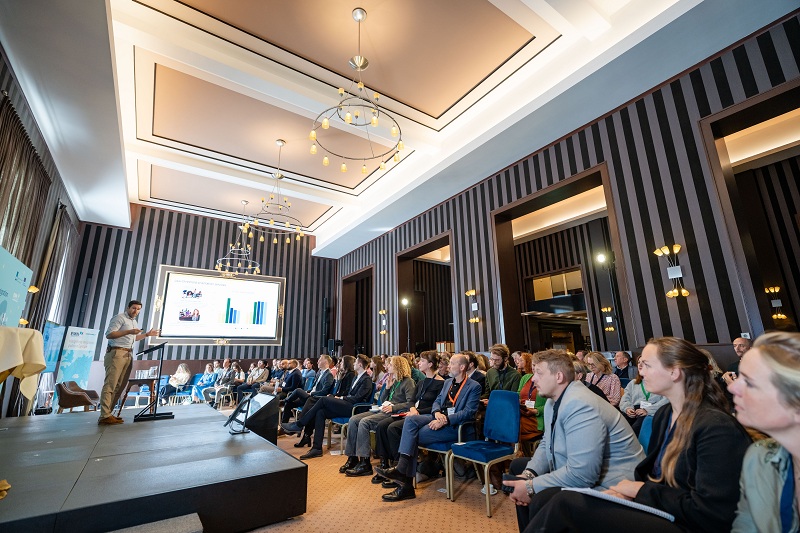
The conference was held at Sociëteit De Witte in The Hague. Over 100 relations attended the event. The audience consisted of a diverse group of practitioners and specialists, including government and municipal officials, legal experts, migration professionals, academic researchers and students. Participants from a variety of countries such as Czech Republic, Italy and Sweden attended the conference, which was moderated by Bahram Sadeghi.
> Download the conference presentations
Photos: Martijn Beekman
CONTENT
Opening
Rhodia Maas, Director-General at the Immigration and Naturalisation Service (IND)
Arjan van Noort, Director of Society and Integration at the Ministry of Social Affairs and Employment (SZW)
Presentation EMN inform 'Early integration of applicants for international protection'
Jade Wirken and Jasper Gloerich, researchers EMN Netherlands
Case studies from Germany, Spain and Austria
Germany | Daniel Dwars, Management and quality assurance of project work, integration through sports, German Federal Office for Migration and Refugees (BAMF)
Spain | Bárbara Peláez Calles, civil servant at the Directorate-General for Humanitarian Assistance and the International Protection Reception Systems, Spanish Ministry of Inclusion, Social Security and Migration
Austria | Julia Schmidlechner, Head of the Coordination Team, the Austrian Integration Fund (ÖIF)
Interview: a conversation on a personal journey through early integration
Hans Lemmens, interviewer, coordinator EMN Netherlands
Expert panel ‘Realising early integration: challenges and good practices'
Romy Santpoort, project manager What works in social policy and practice (Doen wat werkt), Dutch knowledge institute Movisie
Nahom Berhane, coordinator COA participation desk Amstelveen
Robin Muzea, project manager From Asylum to Work (Van Opvang naar Werk), municipality of Rotterdam
Jasper Janvier, business manager Synergie Netherlands
Closing remarks
Hans Lemmens, coordinator EMN Netherlands
EMN Netherlands Conference, 12 October 2026, The Hague
‘Early integration of applicants for international protection: European and Dutch experiences in promoting employment, language learning and cultural orientation’
Opening
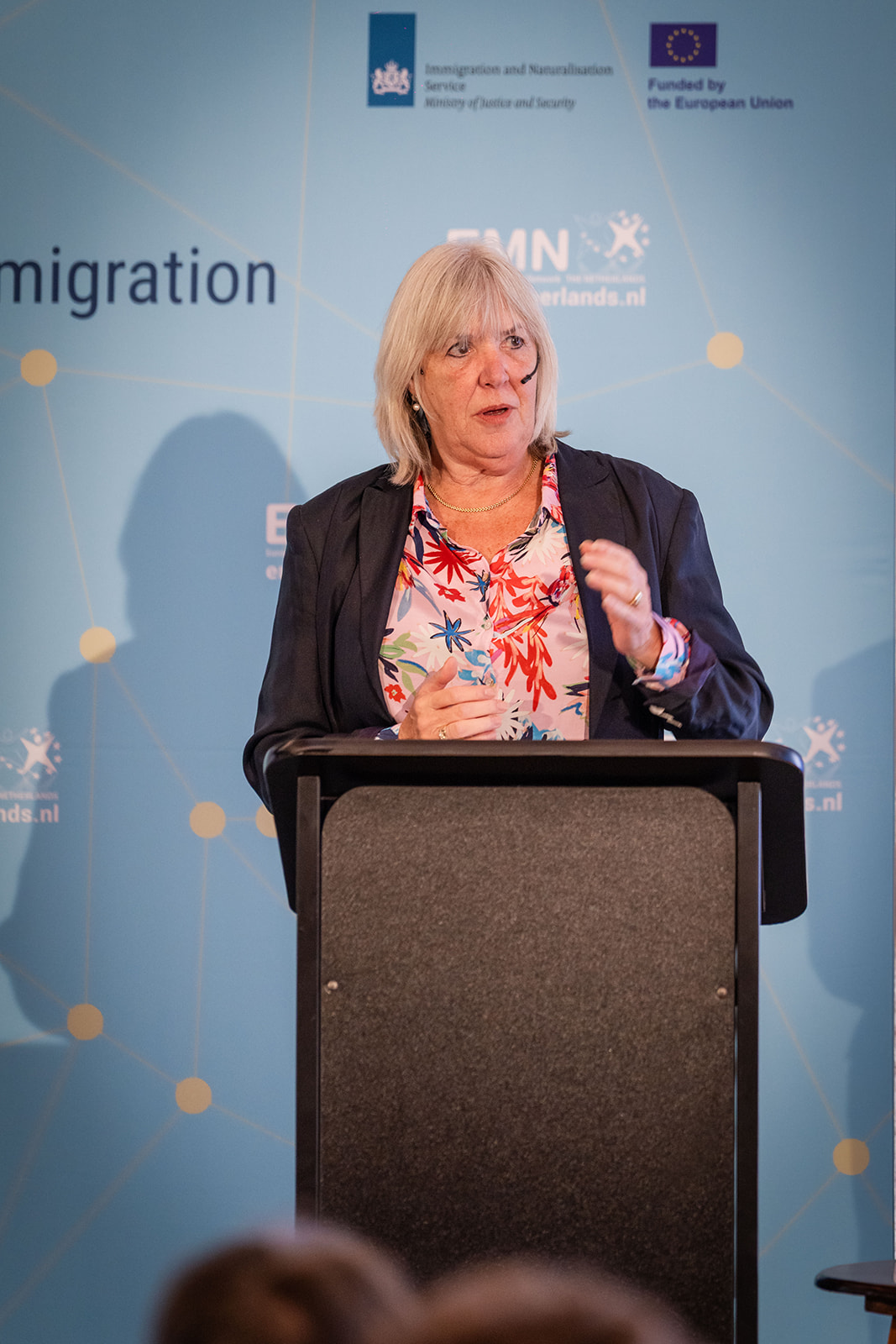 In her opening of the conference Rhodia Maas, Director-General (DG) of the Immigration and Naturalisation Service (IND), mentioned that applicants for international protection face a long waiting period, during which their lives come to a complete standstill. ‘The waiting becomes more bearable,’ she said, ‘if you can work on your own future. Many applicants say they are eager to participate while going through the procedure. That is exactly what we have in mind with early integration.’ She further highlighted that, since there can be no effective policy without research and the application of knowledge, the joining of expertise at the event is of great use and importance.
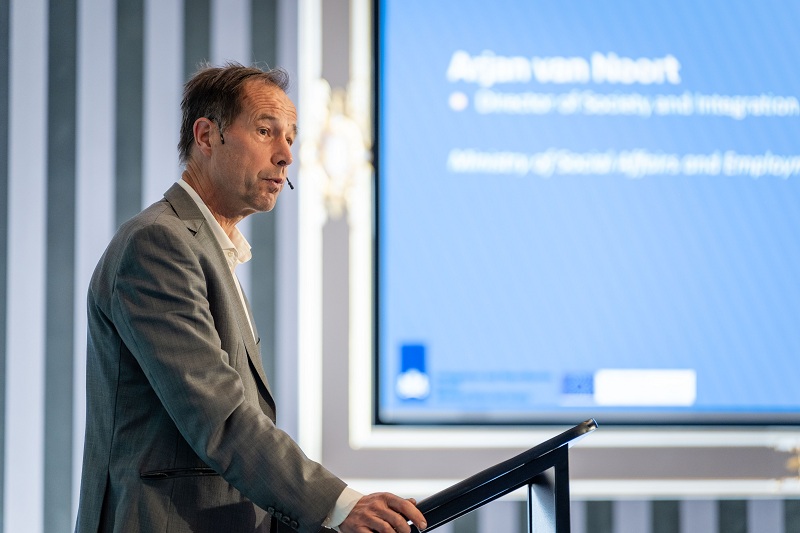
In his key note speech Arjan van Noort, in his role as Director of Society and Integration at the Ministry of Social Affairs and Employment, talked about the Dutch policy for early integration. He highlighted challenges such as language barriers that hinder access to the labour market, even when the necessary skills are present. Moreover, asylum seekers are often unable to work, or face significant restrictions on doing so, for extended periods.
‘By 2030,’ he said, ‘we aim to help an additional 75,000 applicants and beneficiaries into work. Our guiding principle is participation from day one.’ As a key breakthrough relevant to the conference, he mentioned a new Dutch action plan that is being developed, centered on early activation, participation, and employment. It entails language learning and gaining knowledge about Dutch society and the labour market right from the start, as well as an intensive program enabling a transition from volunteer work to paid employment after three months.
Jasper Gloerich and Jade Wirken, researchers at EMN Netherlands, presented the results of the EMN inform ‘Early integration of applicants for international protection’. The research showed that in many European countries, asylum seekers who are awaiting a decision can already start integration activities. Language education is often a key pillar. In many countries, early integration also means gaining rapid access to employment or being able to start exploring employment opportunities. Countries often combine early access to the labour market with career guidance, skills training, individual support and cooperation with employers and civil society organizations. The length of time people have to wait before they are allowed to work varies from country to country. Jasper Gloerich and Jade Wirken further showed examples of early integration measures from different countries and highlighted some of the good practices and financial, logistical, systemic and external challenges reported by participating EMN Member and Observer Countries.
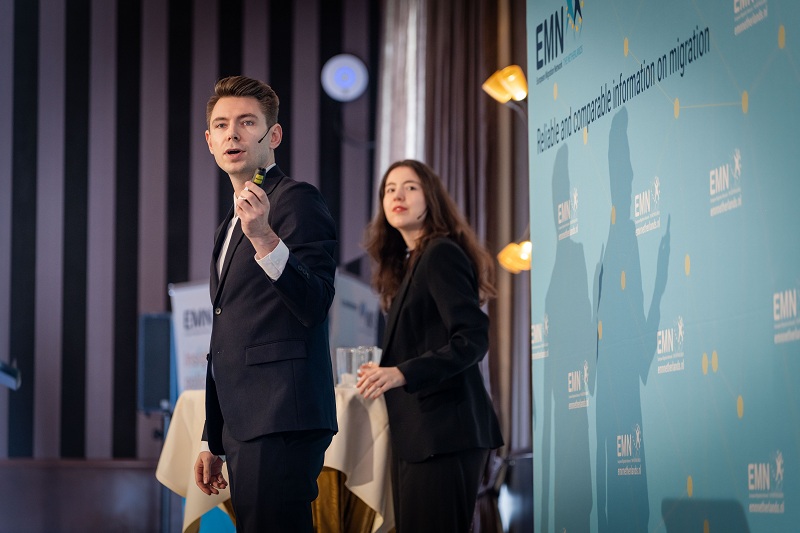
In response to a remark from the audience, that people could integrate into the workforce much sooner through targeted training and guidance, Jasper Gloerich and Jade Wirken suggested that an ‘early skills profile’ could indeed help identify an individual’s existing skills and potential opportunities immediately upon arrival.
Case studies from Germany, Spain and Austria
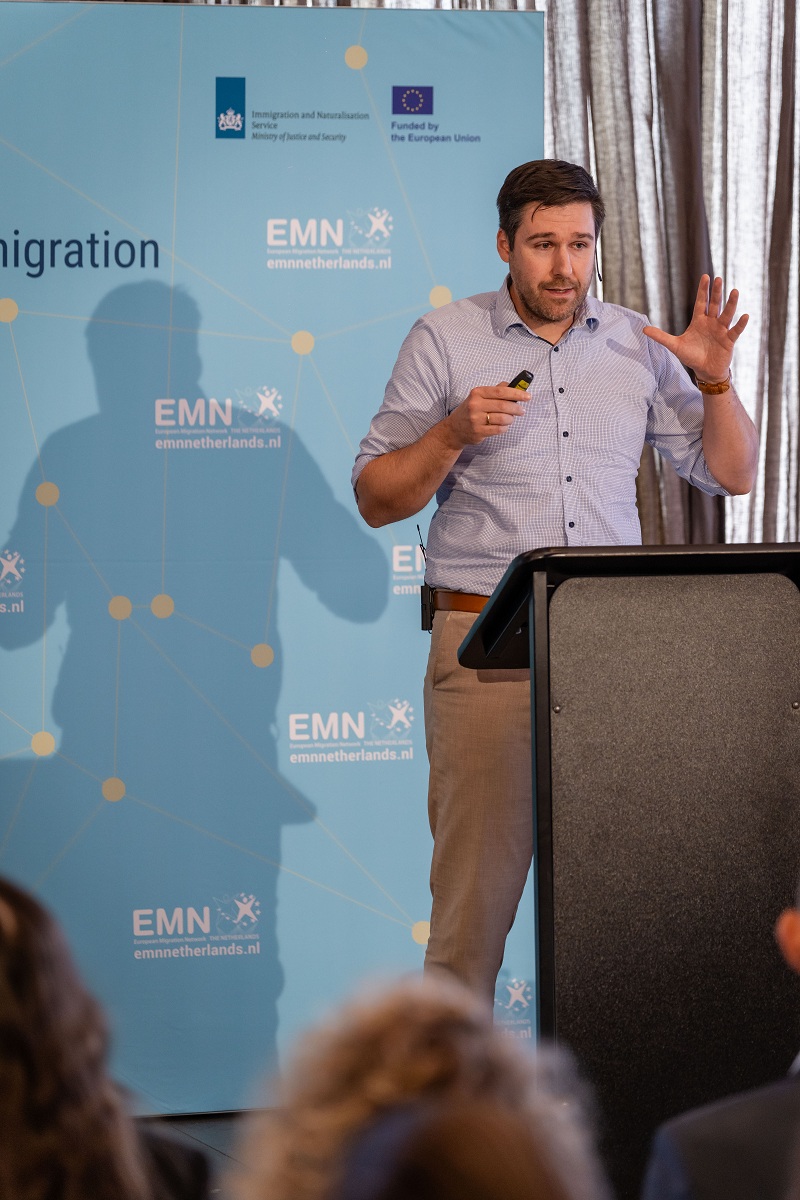 The conference continued with case studies from 3 EU Member States. Daniel Dwars from the German Federal Office for Migration and Refugees (BAMF), discussed Germany’s federal role in integration policy. He emphasized that this work is carried out in cooperation with the federal states (Länder) and municipalities, though he focused his remarks specifically on the federal level. Germany offers integration courses consisting of 600 hours of German language instruction plus 100 hours of orientation, followed by vocationally oriented language courses reaching up to the C2 proficiency level. Furthermore, the office funds projects that promote social cohesion, such as integration through sports, as personal contact and participation are also considered essential: ‘You have language, you have labour, you have work,’ he said, ‘but you also need contact. And we believe that integration works through positive and meaningful contact.’
Daniel Dwars highlighted several early-stage integration measures, including advisory services for adults and young people covering topics such as housing, employment, education, finances, health, and child-rearing. He also mentioned ‘roadmap’ courses held in reception centres: short, 15-hour programs taught by individuals with a migration background, delivered in the participants’ native languages. Additionally, there are orientation courses spanning 300 hours, structured into six modules covering twelve potential themes; some of these are mandatory, while others can be tailored to the specific needs of the group.
There are also separate courses designed for female migrants, specifically those who are engaging with environments outside their own communities for the first time. These courses are led by women for women, providing a safe space to discuss experiences and questions. The speaker noted that, for a long time, Germany placed a heavy emphasis on a ‘language-first’ approach. As a result, some individuals spent a significant number of hours in formal instruction without gaining any practical work experience. The ‘job-turbo’ program, introduced in 2022-2023 during the Ukraine crisis, aims to guide individuals into the labour market more quickly.
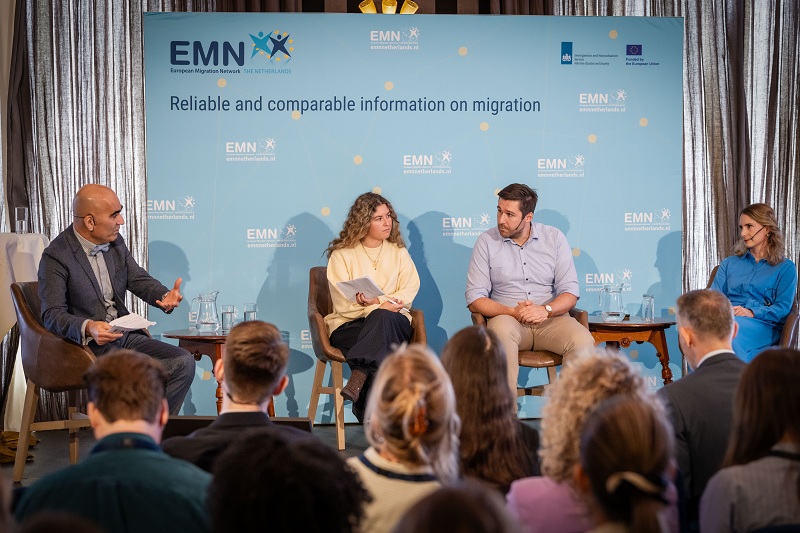
Next, Bárbara Peláez Calles from the Spanish Ministry of Inclusion, Social Security and Migration explained the structure of the Spanish reception system, which consists of three phases: initial assessment, reception, and autonomy. Each phase involves evaluating individual needs and vulnerabilities to determine the most appropriate reception setting. Bárbara Peláez Calles emphasized that integration begins the moment an individual first comes into contact with the system. During the initial phase, participants have access to Spanish language classes, literacy support, and information regarding public and private services, as well as legal or administrative procedures. In the reception phase, language and literacy training are expanded to include information on Spanish society, rights and obligations, gender equality, education, and healthcare, alongside vocational guidance. Language was presented as a key to achieving autonomy and accessing the labour market. Bárbara Peláez Calles noted that language acquisition and employment should not be viewed as separate processes but rather developed in parallel, supported by personalised guidance that takes into account digital skills, career orientation, professional experience, and existing certifications.
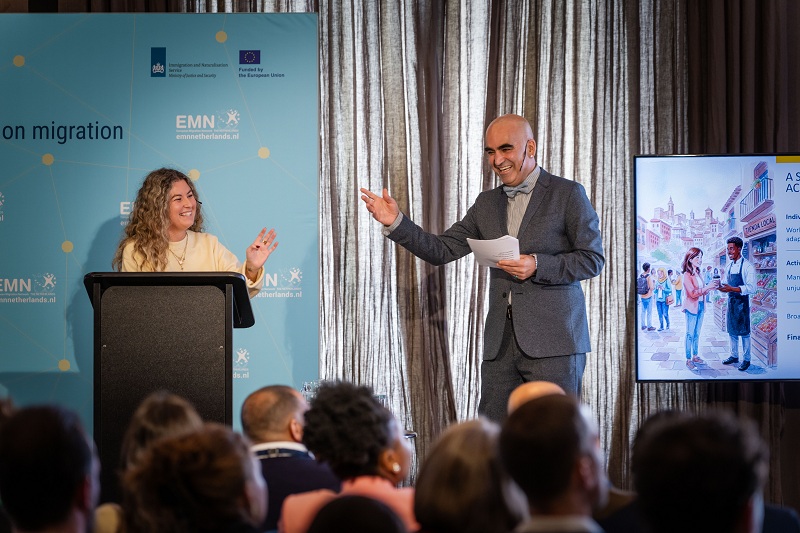
She identified several key challenges, including the high volume of arrivals, the diversity of nationalities, and the uncertainty surrounding the duration of administrative procedures. In 2025, more than seventy thousand people were assisted, and currently, the figure stands at approximately twenty-five thousand. The situation in Ceuta is also cited as an example of the strain on the system, with a large number of arrivals in a city of roughly eighty thousand inhabitants. The speaker emphasised that the system places a strong focus on individual assessment and personalized integration pathways. The ultimate goal, she concluded, is ‘to transform uncertainty into preparation. We can really assure this if we help people to build the skills and confidence that are needed to achieve autonomy and to achieve full participation in Spanish society’.
The final speaker of this session, Julia Schmidlechner from the Austrian Integration Fund (ÖIF), stated that ‘First of all, we know that early language learning matters. The earlier people start learning German, the better and more successful their integration will be in Austria.’ Consequently, she continued, accessible language options and introductory orientation courses are available, while more comprehensive integration measures typically follow once an individual has been granted legal status. Julia Schmidlechner further mentioned a mandatory course on fundamental rules, provided in federal reception centres, which covers topics such as social norms, rights and responsibilities, and gender equality. Furthermore, there are online language resources, a language portal managed by the Austrian Integration Fund, and women’s centres in various federal states that focus on education, legal matters, and protection. The language portal (www.sprachportal.at) is the largest German learning portal, with more than 3.6 million page views in 2025. It is free and accessible online for everyone. Vocational training sessions are also provided on the language portal, including guidance on working in Austria, job application training, and insights into specific sectors, delivered via livestreams from workplaces such as hotels, hospitals, and supermarkets. As the number of individuals with low literacy levels within refugee populations is rising, a new ‘Alpha’ literacy portal has been developed.
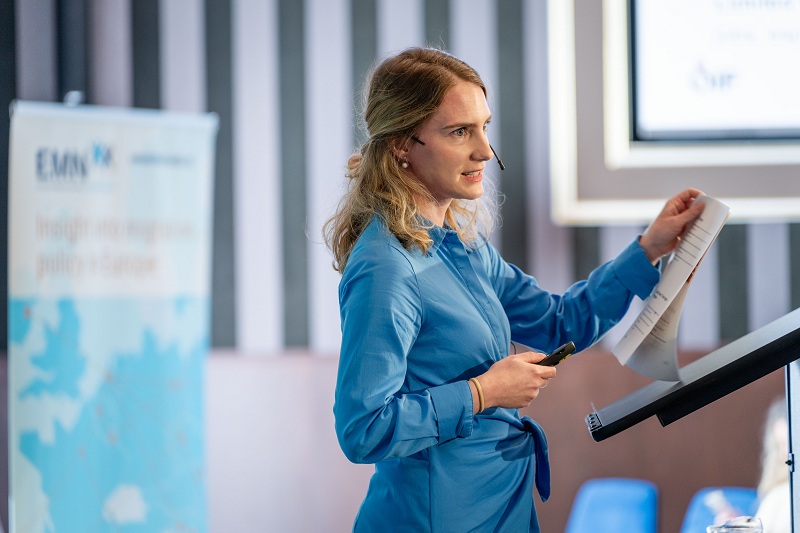
Julia Schmidlechner emphasised the importance of self-study, given that reaching a proficient level of German is a time-consuming process. Additionally, the literacy portal provides support for basic digital skills, featuring audio assistance and translations in multiple languages, including German, Arabic, Dari, Ukrainian, and Somali. She explained that many people move to Vienna due to the presence of social networks and higher welfare benefits, even though job opportunities are more readily available in the western regions. The government is planning a new integration program that includes an assessment of skills and work experience, alongside three core pillars: language, values, and vocational training. Participation will be mandatory, and non-compliance may result in a reduction of social benefits.
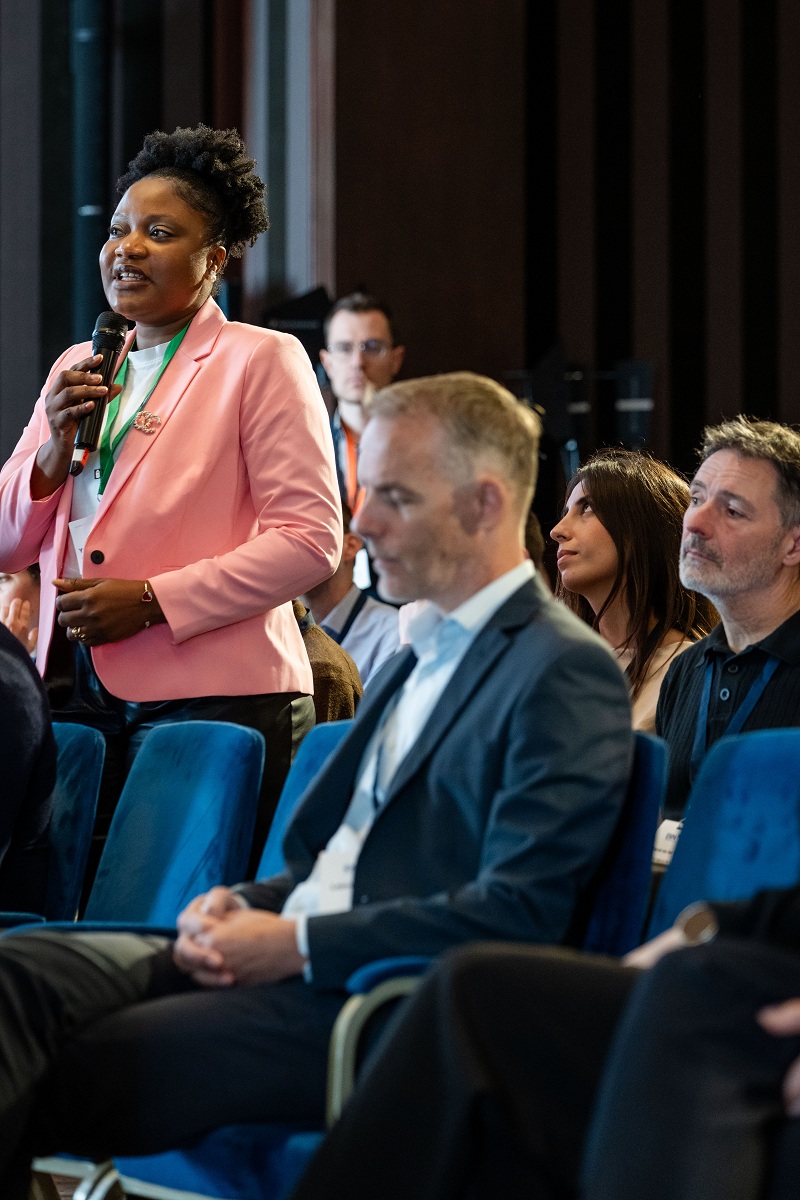 After the presentations, the question was raised whether migration is primarily about offering protection, or if it also serves to counter population decline and labor shortages. Daniel Dwars answered that Germany has, first and foremost, a responsibility to assist people in need and provide international protection. At the same time, he pointed to the aging population, the decline in the number of inhabitants, and the resulting pressure on the pension system and the public sector. Migration is a possible solution to job vacancies and the shortage of skilled workers, as well as a means to maintain prosperity and public services.
Bárbara Peláez Calles identified similar issues in Spain, particularly in rural areas where villages are becoming depopulated. While migration is seen as helpful, a major challenge lies in the coordination between national, regional, and local levels, as many integration-related responsibilities, such as healthcare, education, and housing, ultimately fall to the municipalities. Julia Schmidlechner noted that Austria is also facing an aging population and a significant need for skilled labor. Simultaneously, the country receives refugees who require protection, while their educational backgrounds do not always align with the specific demands of the labour market.
Interview: a conversation on a personal journey through early integration
Hans Lemmens introduced Heba, who shared her personal experiences regarding early integration and finding her way in the Netherlands. Heba continued to talk about the opportunities she took to participate and focus on her future in the Netherlands, where she has applied for international protection. She explained the steps she has taken so far and the limitations and hold-backs she experienced, as well as the ways in which help was offered to her. Among other things, she described challenges she encountered in finding a job. Many employers, she explained, loose interest as soon as they learn that a candidate requires a work permit. She noted that knowing English helped her communicate with employers and employment agencies, adding that finding work is much more difficult without it, though she emphasised that personal motivation remains equally important. Some practical challenges after finding a job she pointed out were transportation for reaching early and late shifts, and balancing full-time work while living in an asylum seekers' centre. When asked to mention one thing she would change in order to help asylum applicants make a good start in the Netherlands, she said: ’Let people start their lives while awaiting the decision.’ She further recommended that more information regarding work permits and the job application process should be made available to both employers and asylum seekers.
Expert panel ‘Realising early integration: challenges and good practices'
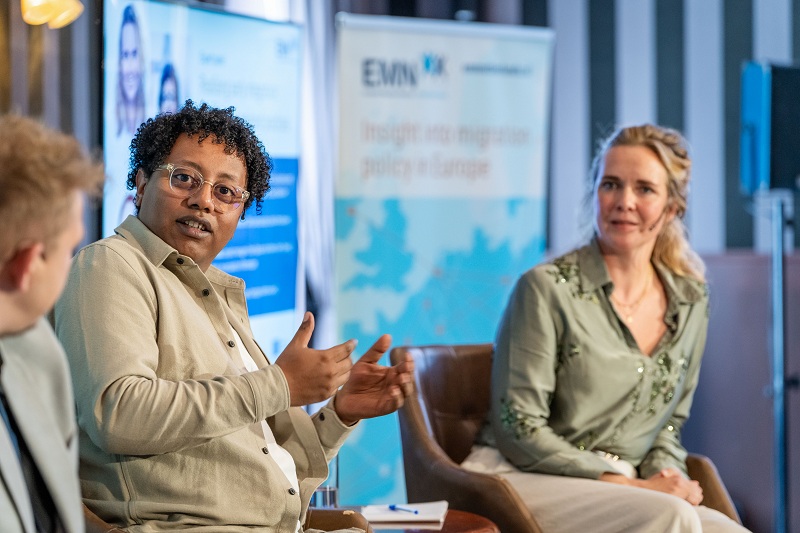
The expert panel, consisting of Romy Santpoort from Movisie, Nahom Berhane, from COA (Central Agency for the Reception of Asylum Seekers) Amstelveen, Robin Muzea from the municipality of Rotterdam and Jasper Janvier from Synergie Netherlands, was asked to respond to two different statements.
First statement: ‘Language first, then employment’
In response to the first statement, ‘Language first, then employment’, it was discussed that integration does not occur solely through language learning, but primarily through participation in society and the workforce. Romy Santpoort, project manager What works in social policy and practice (Doen wat werkt) at Movisie, noted that language and work are most effective when combined: establishing a basic command of the language first, followed by learning through practical experience. She also emphasised that people often acquire the bulk of their language skills while actually on the job. Beyond language and work, Romy Santpoort pointed to other essential conditions that often receive less focus. These include mental health, accessible education, and, crucially, social support and personal relationships, which are especially important for those arriving in a new country with little to no existing network. It is important, she said, ‘to have a social support system to help you go to that job in the evening or early morning, or to have a social support system, a friend, a neighbour, or even family around to help you overcome those barriers.’
Nahom Berhane, coordinator at the COA participation desk Amstelveen, shared a concrete example from his own city, where a care centre facing staff shortages is looking to recruit volunteers from a reception centre who are already doing the volunteer work. These volunteers have already completed basic Dutch language lessons and are gaining work experience, but they still lack the specialised terminology required for the healthcare sector. Consequently, a six-month program is now being considered that combines work with learning this specific terminology, enabling them to eventually transition into paid employment. ‘In this way,’ he explained, ‘you can go from a volunteer job to a paid job’.
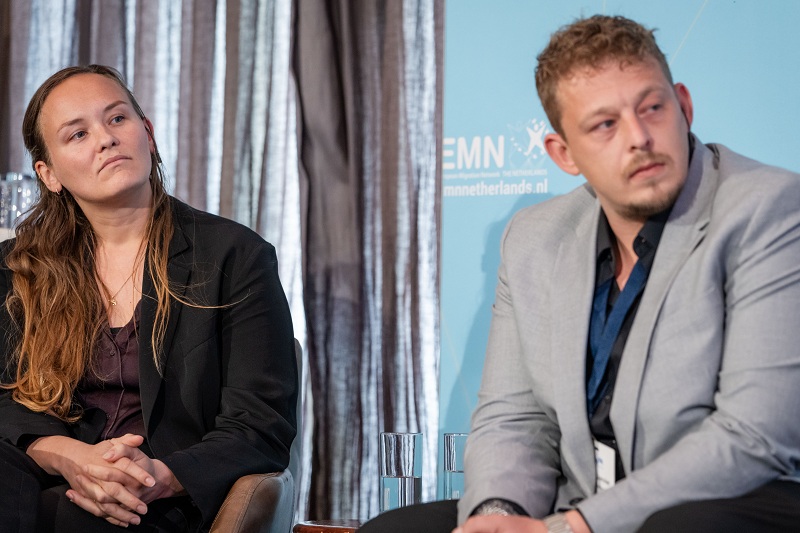
Robin Muzea, project manager From Asylum to Work (Van Opvang naar Werk), municipality of Rotterdam, in response to the statement said that ‘what we see is that most people actually learn the language, like I think we all know, actually in day-to-day life, so also in the workplace’. When asked about what would be helpful, she pointed out that while municipalities currently provide guidance to help people find work, this is not yet a formal, structural responsibility of government bodies. She noted that municipalities hope to have this role officially assigned to them, accompanied by structural funding. At the same time, she suggested that COA should be responsible for organising basic language courses and, where necessary, sector-specific language training programs.
Jasper Janvier, business manager at Synergie Netherlands approached the statement from the perspective of the employer. ‘For me, it's agree,’ he said. ‘When I look at it from an employer's perspective, they say the language, in this case Dutch, is something that's necessary.’ He confirmed that a basic level of Dutch or English is often necessary for an individual to be able to perform a job. In entry-level roles, this is particularly important for establishing contact. Beyond that, the speaker noted that further language development can effectively take place in the workplace itself.
Second statement: ‘For an employer, there are few obstacles to hire an applicant for international protection’
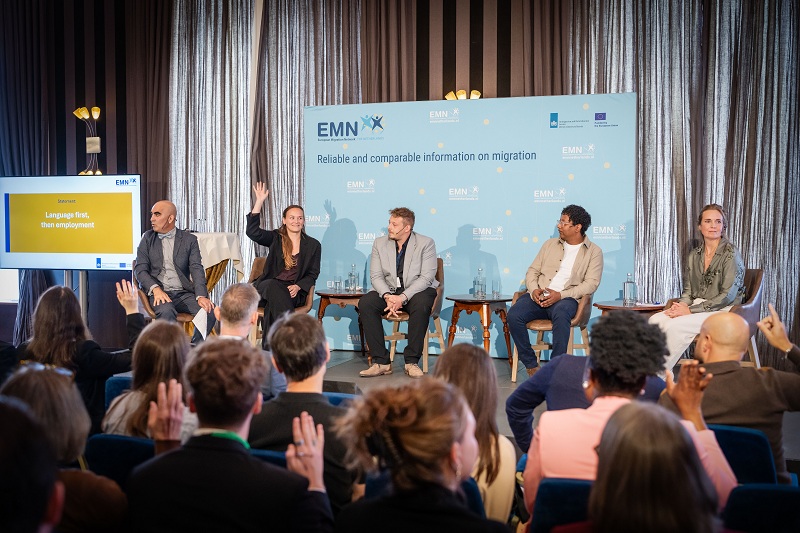
In response to the second statement, ‘For an employer, there are few obstacles to hire an applicant for international protection’, Jasper Janvier stated that, on the contrary, there are many barriers for employers. He mentioned issues such as language difficulties, transportation to remote locations, shift work, and a lack of public transport. It was also noted that while applying for a work permit is possible, employers often need someone quickly, and the 4 to 6 weeks waiting period is simply too long: ‘If you're an employer and you have a shortage in your personnel and your production goes up, for example, you need someone tomorrow, maybe next week.’ A representative from Employee Insurance Agency (UWV) in the audience stated that the waiting period was much shorter, which led to a lively discussion that continued during the closing drinks. Nahom Berhane indicated, in response to the statement, that for him it is not a simple ‘yes or no’ question. He pointed to an example from Amsterdam where a job coach and a city-wide campaign successfully helped more people find employment. Greater awareness can, in this way, lower the barriers, he said.
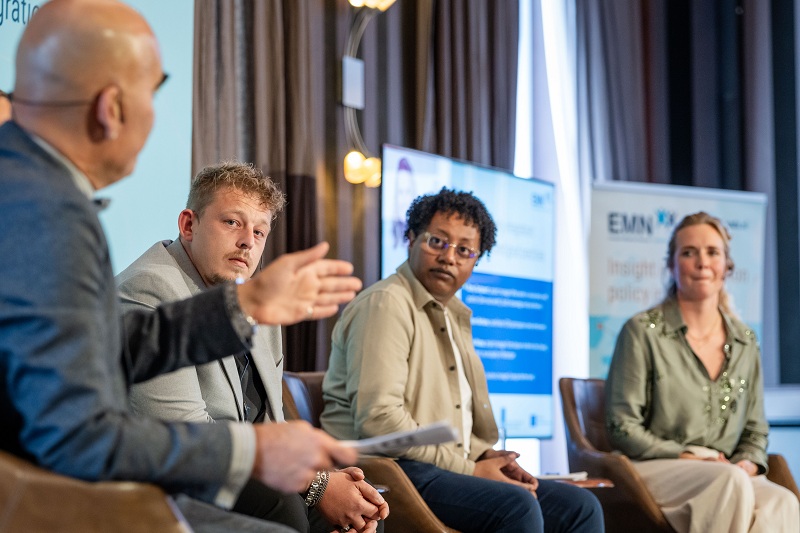
Robin Muzea emphasised that employers face significant risks and uncertainties, particularly regarding the relocation of applicants for international protection and the short notice with which individuals may sometimes have to move. Consequently, employers often view investing in this group as a risky proposition. She also noted that temporary employment agencies are generally more willing to take on this risk, and that peak periods, such as Black Friday, further intensify the pressure, as employers require immediate staffing. Romy Santpoort concluded by raising some questions. How do we measure success? When is integration successful? ‘Maybe it’s not just about having a paid job,’ she said, ‘Participating, being part of the community could also be considered successful.’
Hans Lemmens, coordinator EMN Netherlands, closed the conference.
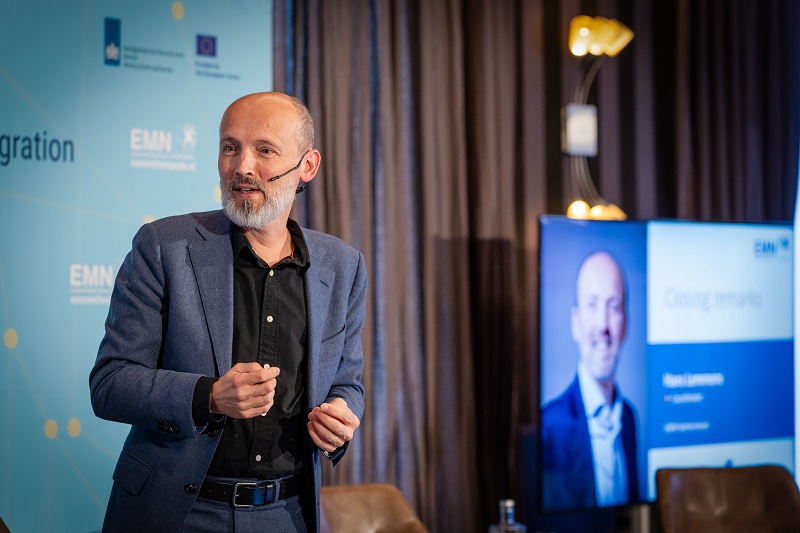
Photo impression