
Main Area
Main
Human trafficking
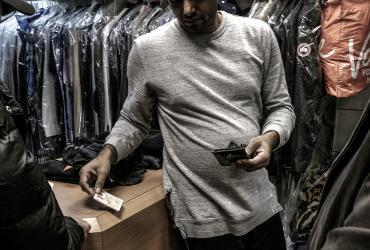
Countering human trafficking is an EU priority. Victims are often among the most vulnerable people in society.
Human trafficking involves recruiting, transporting, transferring, harbouring or receiving someone through coercion in order to exploit them. Exploitation may include forced labour, child labour, forced prostitution or being forced to participate in criminal activities. Victims and witnesses who do not have a valid residence permit in the Netherlands may be eligible for a residence permit if they report human trafficking to the authorities. The Netherlands encourages victims and witnesses to report human trafficking by offering this possibility.
In the Netherlands, the National Rapporteur on Human Trafficking plays an important role in addressing human trafficking. The Rapporteur monitors the impact of anti-trafficking policies and makes recommendations for improvement. At European level, the EU Anti-trafficking Coordinator performs a similar role.
Please note: the publications on this page are from July 2024 onwards. For earlier publications, please switch to Dutch (the EMN PDFs of the publications on the Dutch pages are in English). The filter below is in Dutch and will be available in English towards the end of 2026.
EMN study | Human trafficking
Long-term EMN study providing an overview of EU-funded measures and the efforts of EU Member States and EMN Observer Countries to tackle human trafficking.
EMN study: ‘Trafficking in human beings – the international dimension'
17 July 2025Long-term EMN study providing an overview of EU-funded measures and the efforts of EU Member States and EMN Observer Countries to tackle human trafficking.