

Main Area
Main
EMN inform, EMN NL two-pager | International cooperation
19 December 2024

Diplomatic relations are an increasingly important part of international migration policy. They usually involve bilaterial agreements, but strategies vary per country.
EMN NL ad-hoc query | Return, International protection
10 December 2024
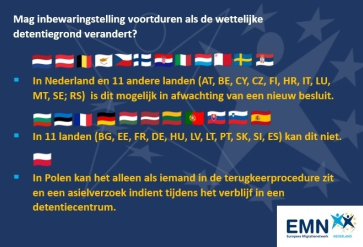
The legal grounds for detaining migrants from non-EU/EFTA countries* (third countries) during asylum, return, or transfer procedures are set out in three separate EU Directives. Most countries have incorporated this three-part approach into their national legislation.
EMN inform, EMN NL two-pager | International protection
3 December 2024

Fluctuating numbers of asylum applications pose a challenge for reception, not only in the Netherlands, but also in the rest of Europe. Although governance models for housing asylum seekers vary, countries often encounter the same bottlenecks.
EMN inform, EMN NL two-pager | Integration
7 November 2024

Most European countries offer integration courses to migrants from non-EU/EFTA countries* (third-country nationals), but the topics covered and the target groups vary.
EMN Netherlands ad-hoc query | Integration
24 October 2024

Family members from outside the EU/EFTA* who apply for family reunification in the Netherlands must pass the ‘civic integration examination abroad’ before their arrival.
EMN Country Factsheets 2023
7 October 2024
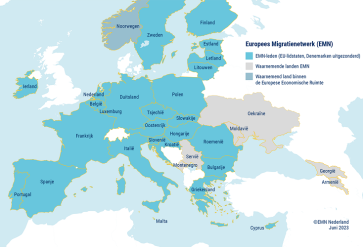
Want to learn more about the migration policy of an EU Member State or an EMN Observer Country? The Country Factsheets of the European Migration Network (EMN) provide a quick and clear overview of the migration policy and key policy developments of each country.
EMN inform, EMN NL two-pager | International protection
16 September 2024

Asylum applicants who may be victims of torture and/or ill-treatment are vulnerable. EU Member States are required to take this into account during the asylum procedure.
EMN inform, EMN NL two-pager | International cooperation
10 September 2024

Migration and development cooperation may intersect, for example in policies on regular migration pathways and migration management systems.
EMN inform | Return, reintegration
6 September 2024

Most European countries have a coherent policy for return and support for reintegration in countries of origin. This involves, for example, cooperation, coordination and division of responsibilities between all organisations involved.