
In 2025, the number of irregular border crossings and first-time asylum applications in the EU decreased, as in previous years. At the same time, the number of Schengen visas issued increased.
European migration trends | EMN Statistical Annex
European migration trends 2025: fewer asylum applications and irregular border crossings
3 September 2026
> Read the full Statistical Annex to the Asylum and migration Overview 2025
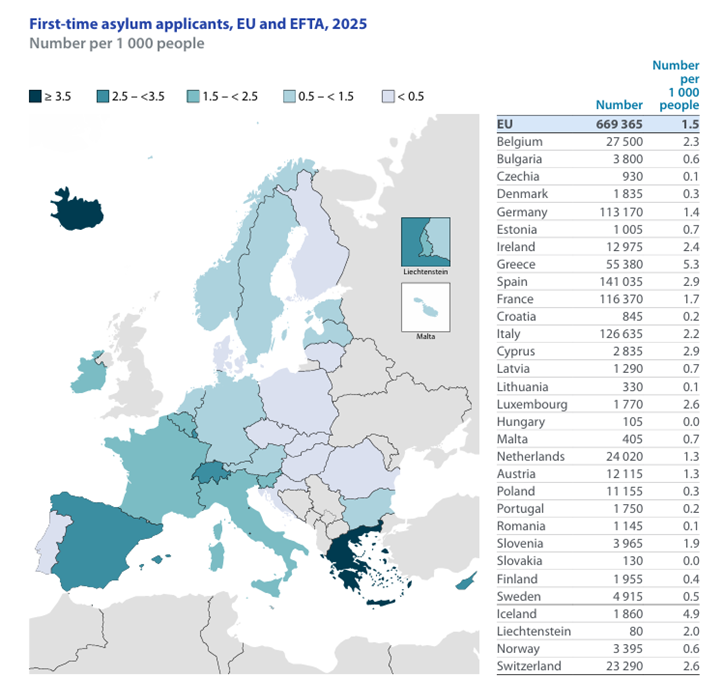
The recorded number of people who crossed the EU’s external borders without authorisation fell to 180,211 (25%) in 2025. The number of first-time asylum applications also decreased, from more than 912,000 in 2024 to almost 670,000 in 2025, a decrease of 27%.
Number of asylum applications in the EU/EFTA by country
Increase in asylum applications from Venezuelans
Most first-time asylum applications in 2025 were submitted by people from Venezuela (13.3%), Afghanistan (9.5%) and Syria (6%). In 2024, the top three consisted of the same countries, but the percentage of people from Syria was higher (16.4%) and that of people from Venezuela and Syria was almost equal (8 and 7.9%, respectively). Most positive asylum decisions were given to people from Afghanistan (29%), Venezuela (18%) and Ukraine (5.2%).
More visas and legal residence
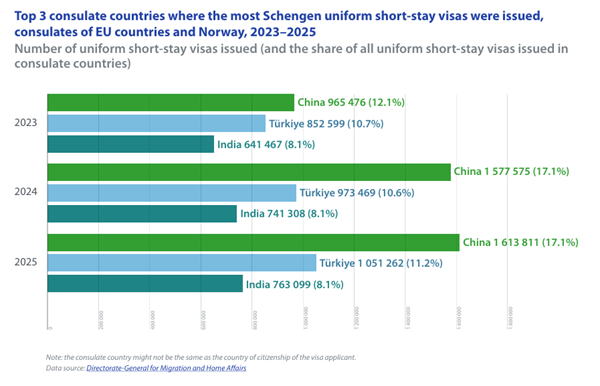
More than 9.5 million Schengen visas for short stays were issued in the EU and Norway in 2025, compared to almost 9.3 million a year earlier. At the same time, the percentage of people from non-EU/EFTA countries legally residing in the EU increased from 6.4 to 6.8 per cent of the total population of the EU (plus Norway) in 2025.
Top 3 consular countries for issuing short-stay visas
Sources
The migration figures are drawn from the Statistical Annex to the European Migration Network’s ‘Asylum and migration Overview 2025’. The annex presents European and national data on migration, asylum, and human trafficking, accompanied by explanatory notes and sources. The accompanying research report provides a comprehensive overview of policy and legal developments across various migration and asylum-related themes in EU member states and EMN observer countries in 2025.