
The collapse of the Schoof government and the subsequent election campaign underscored that asylum remained a central political and societal issue in the Netherlands throughout 2025. Other key topics included labour migration, return, and integration. At the European level, Member States spent the past year preparing for the entry into application of the EU Pact on Asylum and Migration on 12 June 2026.
Migration and asylum overview 2025 | EMN Netherlands
EMN Netherlands 'Asylum and migration overview 2025': Societal tensions and preparations for the EU Pact on Asylum and Migration
23 July 2026
> Read the full EMN Netherlands Asylum and migration overview 2025
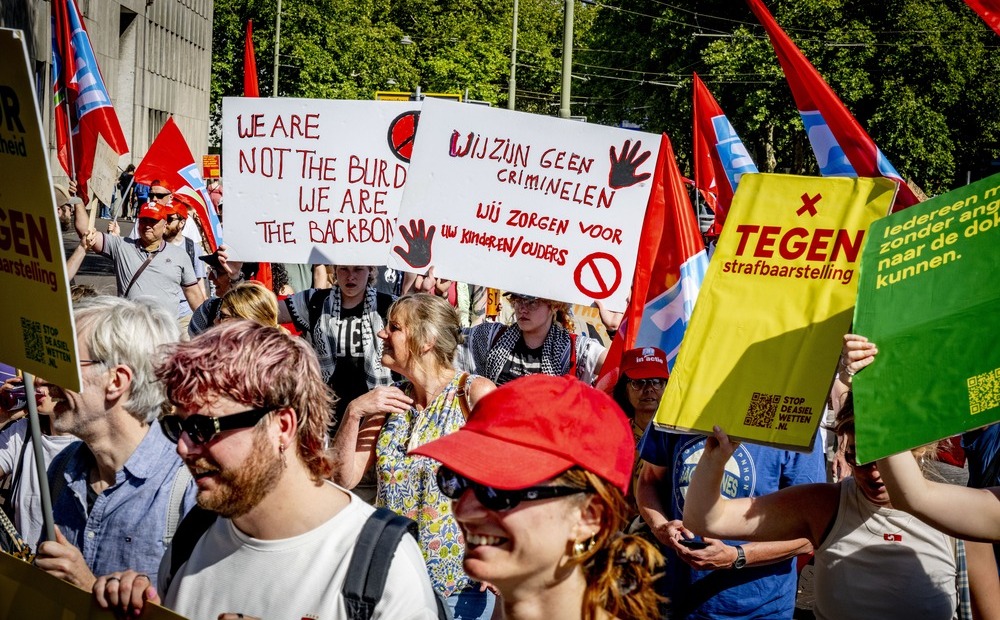
Throughout the year, issues such as priority access to social housing for beneficiaries of international protection and return support for Syrians were widely debated. Alongside the continued pressure on reception capacity in Ter Apel, societal tensions persisted regarding the reception of applicants for international protection.
Like the other EU Member States, the Netherlands spent the past year preparing for the implementation of the EU Pact on Asylum and Migration, which entered into application on 12 June 2026. The Pact constitutes the most far-reaching reform of the Common European Asylum System (CEAS) since its establishment in the early 2000s. In December, building on the Pact, the Member States also reached political agreement on a new Return Regulation.
While international protection (asylum) once again remained a major policy area in 2025, significant developments also took place in other fields, including temporary protection for displaced persons from Ukraine, labour migration, return, and integration.
Key developments and trends in 2025
Regular migration
- Higher penalties for labour market violations and labour exploitation.
- New legislation regulating temporary employment agencies.
- Measures to maintain the Netherlands’ attractiveness for start-ups.
International protection (asylum)
- Establishment of a new authority responsible for the identification and registration of applicants for international protection.
- Resumption of the processing of asylum applications lodged by applicants from Lebanon and Syria.
- Introduction of the possibility to accommodate residents of reception centres who repeatedly cause serious nuisance in separate facilities with a more restrictive regime.
- Introduction of a weekly reporting obligation at central reception locations.
- Revision of the Immigration and Naturalisation Service (IND) assessment methodology for establishing family relationships in family reunification procedures.
Temporary protection (Ukraine)
- Stricter rules governing the reception of beneficiaries of temporary protection.
- Increase in the personal financial contribution required from employed displaced persons from Ukraine staying in municipal reception facilities.
- Withdrawal of the living allowance for displaced persons from Ukraine earning more than 115% of the applicable allowance amount.
Integration
- Abolition of fines for beneficiaries of international protection who fail to meet civic integration requirements within the prescribed timeframe.
- Launch of an online platform to support municipalities in guiding migrants and newcomers into employment.
- Revision of the employer subsidy scheme for supporting beneficiaries of international protection in the workplace.
- Publication of the second Work Agenda – Towards an Inclusive Labour Market.
Border management and visa policy
- Measures to strengthen controls at both the external borders of the Schengen Area and the Netherlands’ internal borders.
- Adoption of legislation implementing the Entry/Exit System (EES).
- Extension of the temporary internal border controls carried out by the Royal Netherlands Marechaussee.
Migrant smuggling and irregular migration
- Launch of a new border management project in Ethiopia aimed at preventing trafficking in human beings and migrant smuggling.
- Increased fines for employers engaging in the illegal employment of third-country nationals.
- Draft legislation to criminalise the unlawful stay of third-country nationals.
- Measures to improve the legal position of Surinamese nationals who have resided in the Netherlands for an extended period.
Return
- Temporary increase in financial assistance for voluntary return to Syria.
- Obligation for national courts reviewing immigration detention to assess whether the principles of non-refoulement, the best interests of the child, and the right to respect for family and private life preclude removal or detention (the Adrar judgment).
- Modernisation of information provision for third-country nationals held in immigration detention.
Draft legislation to expand the possibilities for issuing an exclusion order.
About the EMN Netherlands Asylum and migration overview
Through its annual Asylum and Migration Overview, the European Migration Network (EMN) compiles the most significant policy developments across the EU Member States and EMN observer countries. The Dutch Annual Overview on Migration and Asylum is based on the Netherlands’ national contribution to this exercise.
The publication provides a detailed overview of policy developments, challenges, and legislative and policy initiatives in the Netherlands during 2025. It also places these developments in the legal, geopolitical, and operational context in which they occurred.