
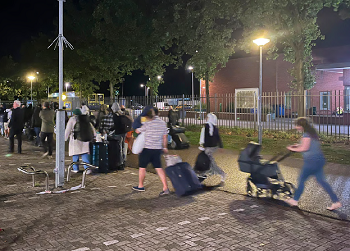
The ongoing war in Ukraine and an increase in the number of applications for a residence permit continued to put pressure on the reception system in the Netherlands in 2023. Migration and asylum policy also remained one of the most discussed and controversial topics in the public and political debate.
Migration and asylum policy in the Netherlands
EMN Netherlands Annual Report 2023: Dispersion Act, an increase in residence permit applications, and the fall of the cabinet
23 July 2024
> Read the full annual report (English) on Dutch migration and asylum policy in 2023
The fall of the Rutte IV cabinet—partly due to disagreements over migration policy—shaped both the political and societal debate over the past year. Concrete measures such as the Distribution Act raised political and practical questions, while pressure on the asylum reception system continued to mount. The integration debate, including discussions on the 24-week employment restriction (limiting asylum seekers to no more than 24 weeks of work per year), underscored the ongoing search for a balance between legal, economic, and social interests. International agreements, such as the Tunisia-deal further, illustrated the complexity of cross-border migration challenges.
Key developments and trends in 2023
Legal migration
- Greater flexibility and efficiency in application procedures, such as the simplification of applications for family members of EU citizens.
- Expansion of the number of central service points for international talent.
International protection (asylum)
- Legislative proposal: “Act on Common Tasks for Asylum Reception Facilities” (Dispersion Act).
- Abolishment of written hearings for likely successful asylum applications.
- Launch of the “Accelerated International Protection Decision” (BAA) project to fast-track applications with a high likelihood of success due to the situation in the country of origin.
- Expansion of accommodation capacity for asylum seekers and status holders.
- Suspension of the 24-week employment restriction for asylum seekers in the Netherlands.
Temporary protection / displaced persons from Ukraine
- Termination of the Temporary Protection Directive for non-Ukrainian displaced persons from Ukraine with temporary residence permits in Ukraine, followed by a freeze of that termination pending a ruling by the Council of State.
- Changes in social services (such as housing allowance and healthcare) for displaced persons from Ukraine
- Increased focus on the integration of displaced persons from Ukraine.
Integration
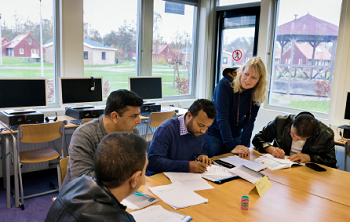
- Action plan 'Status Holders at Work'
- New legislation and a revision of the conditions for the civic integration exam
Dutch citizenship and statelessness
- Amendment of Dutch naturalisation rules, including changes to the minimum residence period required to apply for Dutch citizenship.
- Approval by the Senate of the new “Statelessness Determination Procedure Act” to align more closely with international norms.
Borders, Visas, Schengen - Amendments to the Aliens Act Implementation Guidelines 2000 and the National Implementation Act for EU Regulations on Borders and Security following the update of the Schengen Information System (SIS).
- Adjustment of Royal Netherlands Marechaussee (KMar) procedures to prevent ethnic profiling.
- Abolition of the previously mandatory airport transit visa requirement (ATV) for Turkish seafarers.
Return - Policy changes aimed at improving the efficiency of (voluntary) return.
- Amendments to the Aliens Act Implementation Guidelines 2000 (Vc), including:
- Adjustment of the policy framework for the so-called sustainability and proportionality test when lifting a declaration of undesirability or an entry ban due to an Article 3 ECHR impediment to return;
- Abolition of the requirement for the personal delivery of an entry ban or declaration of undesirability to prevent delays. - Expansion of Dutch support for voluntary return and reintegration.
Migration and development cooperation
- The Netherlands’ accession to the International Centre for Migration Policy Development (ICMPD).
- Presentation of the Dutch Africa Strategy 2023–2032, with key goals of reducing irregular migration and establishing migration partnerships.